
First things first.
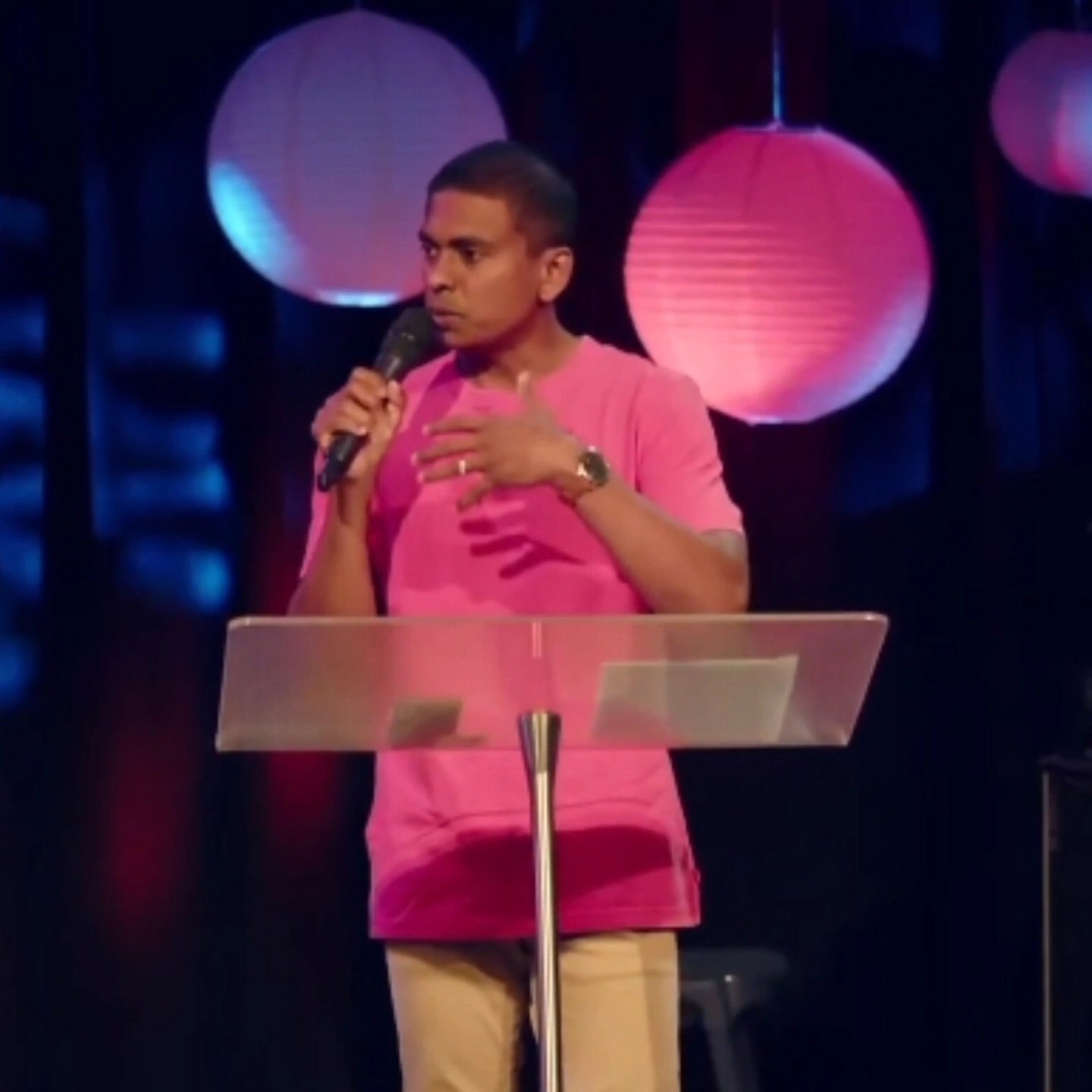
Before we get started on learning how to develop the 3 essential traits of a transformational leader, I want to let you know that I personally train and develop existing leaders to become transformational leaders. I do this through a process of revelatory education, where those I mentor go through a refinement journey that positively impacts every area of their lives.
If you would like to apply for this mentorship program (as places are limited), please go through the application process using the link below.
Once your application has been reviewed, if it is a good fit, we will contact you to continue the process.
Now, let’s get back to it. 👇
Want to Become a Transformational Leader? Develop These 3 Must-Have Traits
First of all, we need to clarify what a transformational leader is. Leadership can be defined in many different ways, as everyone has their own understanding of what leadership means. Even when the word transformation is used, people can have different views on what it means to transform.
To avoid any confusion, I want to share my understanding of what I mean by becoming a transformational leader.
I believe that positive transformation means growing in abundance in every area of our lives. Too often, success is measured only by financial growth. While finances are important, this perspective can be limiting because an overemphasis on money can come at the expense of other areas that are equally important.
True transformation requires growth across all areas of life simultaneously. Finances matter, but what about our health? What about our marriage? What about our effectiveness as a parent? What about our happiness, joy, and overall well-being? And what about our sense of purpose and fulfillment?
All of these areas are just as important—if not more important—than achieving success in a single area. When I talk about positive transformation, I am referring to a balanced and abundant growth that impacts every aspect of our lives.
Now, a transformational leader is someone who takes responsibility for positively transforming every area of their own life while also leading others to do the same. They take charge not only of their own growth but also help those around them grow and develop in every area of life.
A transformational leader builds a powerful community of people who are committed to becoming better and making a positive impact on those around them. They are legacy creators and generational leaders. By transforming themselves and investing in the transformation of others, they leave behind people who are equipped to achieve even greater things than they did.
This is my definition of a transformational leader.
As we continue in this article, I will set out the 3 must-have traits that a transformational leader must possess in order to create this flow-on effect in the lives of others.
This is powerful because having these 3 essential traits can mean the difference between you and those around you experiencing greater abundance in the years ahead.
The question you must ask yourself is: Do I want to experience greater abundance in all areas of my life from this day forward?
If your answer is yes, continue reading and apply the principles outlined in this article so that you too can become a transformational leader.
#1 ONENESS
The first trait that we will dive into, which a transformational leader must have, is ONENESS.
Oneness is about a leader’s self-image and being secure in his or her identity. Because a transformational leader operates as the foundation of an organization (whether at home, at work, or within a business), the limelight is not on them—it is on their people.
If a leader does not carry the trait of oneness, he or she cannot go deeper in their leadership walk, which then hinders the transformation of their people.
We will now take a deeper dive into the four subcategories that define this trait of oneness. Make sure you have these four subcategories in check if you desire to become a transformational leader.
Secure In Your Ability:
Being secure in one’s ability is important because if we question our own ability to do something, then when we lead, we cannot trust those whom we lead to perform what is needed.
This keeps leaders trapped in a cycle of overworking and in the insecurity of trying to hold their position through effort and status rather than results. If we as leaders can’t produce results, how can our people also produce results?
This complex is very common, and it almost always has nothing to do with skill but everything to do with belief. Skill is a minor issue that can be solved through developing training pathways, but belief is developed through auto-suggestion, which is speaking our outcome before the outcome happens.
Now, this might seem counterintuitive to the business world, but when we understand this powerful idea of auto-suggestion, we can begin to become architects of our future. Then, when we learn the skills required to do the work, we do not compensate by overworking or relying on status. Instead, we operate intelligently to produce results.
We become secure in our ability, which allows us to walk through uncertainty knowing that whatever comes our way, we will have what it takes to produce the desired results.
This is important because, as transformational leaders, this same sense of oneness and trust must be transferred to our people. They need to know that whatever they go through, they will have the ability to produce results when the time calls for it.
The simple key is this: Create your future with your words first, then get the training.
This is what makes a person secure in both their own ability and in the abilities of their people.
Stable Self-Image:
A stable self-image is important for a transformational leader because the strength of the foundation determines the height of the building. The building represents our organization, while we, as transformational leaders, represent the foundation.
When the foundation is unstable, nothing can be built upon it. Therefore, stability is a must-have trait if we want to transform lives. To be stable means to be predictable, and when we are predictable, people can build their lives around us because they know what to expect.
In the previous subcategory, I touched on the concept of auto-suggestion—creating our future through our words. Stability arises from the consistency of doing just that, speaking the same words over and over again so that not only we, but also our people, know and hear what we stand for and who we are.
One day we may project a positive future with our words, but on another day, because things do not happen the way we want them to, our words can slip into projecting a negative future. This is not stability. Stability is when the situation outside changes, but our words do not.
When our words do not change, our actions do not change. This results in a stable self-image and also projects stability to the people we lead. When we are stable, our people feel more comfortable to transform because it is through our foundation that they can grow in stature.
This is powerful if we are to walk as transformational leaders.
Does this mean that we do not change? Of course not. We must play both the role of the foundation and the role of the height of the building, which is to continually grow and change.
How do we do this?
We must have a foundation from which we can continue to transform while still providing stability. The two work together to create a pace of growth that is naturally moving forward, yet is not easily seen with the naked eye.
Is the earth rotating? Yes. Can we see the earth moving with our naked eye? No.
That is how we are to develop a stable self-image—to continue changing and growing, yet appear stable enough to provide our people with a safe environment in which they can continually transform.
This is an art form which must be learned—especially if we are thinking of scaling anything we are doing.
Accountability:
Auto-suggestion is a powerful tool in a leader’s repertoire, but it must always be coupled with accountability. Accountability means backing your words with action. If you say you are going to do something, then do it.
As leaders, we can often use our position to command things to get done. However, to become a transformational leader, we cannot rely on command—we must rely on influence. Influence comes from both what we say and what we do. In fact, our actions almost always speak louder than our words.
Remember, we are leading a group of people who are willingly opening their lives to be transformed. This is an entrepreneurial mindset. Even if we are leading employees, they must be willing to change because transformation is never part of a job description. We hire people for who they are, not for who they can become. Their willingness to transform is always, and must always remain, their choice.
This is why the traditional understanding of leadership needs to change and be viewed from a transformational perspective.
That is powerful because when you understand this, you will structure parts of your organization in a way that creates incentives for transformation. This is just a side note.
We are living in a world with more opportunity than ever before. People need the freedom to pursue those opportunities, even within their jobs. I believe that if organizations do not provide pathways to greater growth and profit within, people will always look for them elsewhere.
The traditional way of leading was showing people what needed to be done by doing it ourself. Transformational leadership is different. It is about doing what we need to do so that our people can do what they need to do.
Most of the time, the work that needs to be done by us is not the same work that needs to be done by our people. However, if we do what we said we are going to do, our people will do what they need to do. In the process of doing so, they will transform into the people they need to become in order to produce the results required to support the words they are speaking about themselves.
This is the meaning of accountability.
Integrated into this trait must also be room for people to make mistakes. Why? Because people are people, and growth often comes through course correction based on feedback.
Within that feedback lies the opportunity for transformation.
As transformational leaders, we are leading people into areas they have never been before. This means they will do things they have never done before. Feedback is how people learn, but how can you give feedback if they have not first moved forward toward their destination?
Accountability is about action—not only correct action, but forward-moving action that creates the environment in which transformation can take place through feedback.
The questions you need to ask yourself are these:
Do your actions match your words?
Are you receiving feedback so that you can continue to transform?
And are you providing feedback to your people so that they can transform as well?
Understanding Your Gift:
This last subcategory of the trait of oneness is understanding our gift—what we are strong in and what is unique to us.
Transformational leaders understand that they have been gifted with something special, and they focus on strengthening that gift. Action is important because it keeps us accountable to what we say. However, what we specifically take action on is just as important as the act of taking action itself.
We can be busy with unproductive and unfulfilling work, and that often happens when we spend our time doing things that are outside of our gifting.
I have been caught many times doing things that I was not gifted at. Eventually, I learned how to delegate my weaknesses so that I could focus on what I was good at. When I did that, I continued to advance in my walk as a transformational leader.
Mastery is the pursuit, but mastery can only happen when we focus on our gifting. That also means we need to know what we are gifted at.
The real key is to “know thyself,” and that happens through the feedback mentioned in the previous subcategory. You see, what comes easy and natural is often an indication of your gifting. When you continue working in that area, you become empowered with more energy as you invest more energy into it.
This is a powerful key if you understand that energy is essential to transformation.
When you do things that drain you, the energy required for transformation is not available because transformation operates on excess energy. Therefore, when you focus on your gift, you are storing excess energy for the transformation that needs to happen so that you can become the person you need to become and continue down the path of mastery.
This process creates an upward spiral of growth.
What is exciting is that as you become better at this, your people will become better at mastering their gifts as well. As you set the example by pursuing mastery in your own gift through focused effort that produces the excess energy needed for transformation, they will begin to do the same.
And guess what?
Transformation will happen in their lives.
When your people are transforming, it is an indication that you hold the substance of a transformational leader. You see, it must be in them to prove that it is in you.
Another aspect of understanding your gift is recognizing that everyone is unique and will possess gifts that you do not have.
A transformational leader does not hold all the answers. They hold the key to finding the answers.
Because we are all unique, we must be careful not to become jealous when our people begin to go further than us. Why? Because we are the foundation. They are meant to expand, grow, and accomplish things that we may have never thought possible.
In fact, they have the advantage of carrying both our uniqueness and their own, while we only possess ours. Of course they are going to outgrow us.
This is one reason traditional leadership can only take a person so far and can even become detrimental to their overall health because it creates the expectation that the leader must have all the answers.
A transformational leader is different.
A transformational leader leads from the foundation. This type of leadership is holistic leadership that produces abundance in every area of our life and in the lives of our people.
#2 MERCY
The second trait that we will dive into, which a transformational leader must have, is MERCY.
Mercy is a powerful aspect of transformational leadership because when we deal with transformation, we are dealing with the identity of a person. Traditional leadership often focuses on outward appearance, but transformational leadership deals with the inward being of those we lead.
Leadership is a lifelong process. It is something we will continue to do until the day we die. The capacity in which we lead and the organizations we lead may change, but the fact that we are leaders will always remain.
We first lead ourselves and then others. While we may be able to distance ourselves from others to a certain extent, we can never distance ourselves from ourselves. This is why we will always be in a position of leadership.
How well we operate in this trait can make the difference between enjoying this lifelong process or struggling through it. The joy we experience as leaders is often the same joy our people will experience.
Mercy is a powerful trait that must be operating within us at all times if we are to call ourselves transformational leaders.
Below, I have broken this trait down into four subcategories that we will now explore. I would highly suggest taking the time to ensure these are deeply embedded within your operating system, working continuously in you as you make decisions concerning both your own lives and the lives of those you lead.
Identity Development vs KPI’s:
The first subcategory we will tackle is the difference between developing the inner being of a person and focusing solely on the outward outcomes they produce.
Mercy is the thread that allows people to change in their own time and produce results from a developed identity.
This is important because when we chase KPIs (and I understand the necessity of having KPIs in results-based organizations), we can easily ignore everything except the outward results. What this often creates is a pseudo-transformation, where the end begins to justify the means.
This is dangerous because it is where abuse can become prominent. It is where we see people compromise their morals and ethics in order to achieve a performance goal.
Now, compromise may not happen all the time, but once the door is opened, it becomes a two-way path. If compromise is an option, it will often be chosen because it is usually the path of least resistance.
A transformational leader operates differently.
For a transformational leader, KPIs take a back seat to identity development. The end does not always justify the means. Instead, we close and lock the door to compromise and open a one-way road where the only path forward is identity development.
That path is highly resistant because we are dealing with people. We are dealing with them changing and becoming the person they need to become in order to produce the results they need to produce.
This means there is only one way forward: identity development.
So where does mercy fit into all of this?
If we are dealing with identity, we are delaying the outcome because we are allowing people to grow at their own pace. It means we must wait for results. It means we must allow people to make mistakes. It means we must allow people to walk at their own pace.
This can be especially difficult in performance-based organizations, but if we practice the trait of mercy, recognizing that the rate of transformation is not predictable, we will learn not to push people outside of their willingness to change.
What does this mean?
It means we stop focusing on others changing first and instead become the change ourselves. We design our leadership journey around our own transformation before expecting transformation from our people.
We begin by looking in the mirror and leading ourselves first. We realize that if we have obstacles to overcome, how much more must our people be dealing with?
As our identity grows stronger and the identities of our people grow stronger, the KPIs—which may initially take a hit—will begin to recover and eventually exceed where they once were.
This is the power of transformational leadership.
So what identity do we build upon?
That depends on a person’s spiritual journey because our inner being is formed through the spiritual aspect of who we are and is expressed through our thoughts and actions.
As a Christian, I believe that Jesus Christ is my Lord and Savior. I believe that through His death and resurrection, He deposited within me the power to accomplish and overcome anything I choose to do in this life.
I will not go deeply into that here because you may believe something different. The purpose of this article is unity, not separation. You are free to choose your spiritual posture.
However, I want to open your understanding to the idea that whatever faith, spirituality, or worldview you hold, the identity you build from should empower you to walk in abundance in every area of life based on who you are, not simply what you do.
Identity is about inner growth, and inner growth deals with the spiritual aspect of a person.
I believe that when you develop this aspect of yourself, and when you provide your people with tools to develop this aspect in a way that aligns with their own journey under a common framework of values—such as abundance, caring for others, love, kindness, and service—you will lead as a transformational leader that transcends religious boundaries.
Remember, it is always about the growth of yourself and your people before the KPIs.
And mercy is the trait that gives you the patience required to walk as a transformational leader.
Long Term vs Short Term Results:
The second subcategory we will look at is understanding that identity development must be viewed through the lens of a longer time period. Usually, whatever time frame you think is required, add another three years for those closest to you and five years or more for those further away.
We must also understand that the speed at which we accomplish desired results is limited by the speed at which transformation takes place within ourselves.
This is why the trait of mercy is important. We may be somewhere that our people are not, yet we expect them to do the things we do and accomplish what we have already accomplished.
I have fallen into this trap many times. I have tried to get people to walk at the level I walk in, only to become frustrated because, in my immaturity, I failed to factor in the time multiplier required for long-term results.
This is why delegation is so important.
Delegation helps bridge the gap between us and our people through someone who may be closer to them and therefore understands them better than we can. Sometimes we move so far ahead that even those closest to us can struggle to keep pace.
Delegation not only helps bridge this gap, but it also frees our time to focus on the new 20 percent of people who will rally around our lives. It is often those who are closest to us in their development who can walk at our pace without becoming overwhelmed. Sometimes, they are new faces we meet along the journey, but we will only discover them if we learn the skill of bridging the gap between where we are and where our people are.
Transformational leaders understand this.
They avoid frustration by extending mercy to people as they grow, while continuing to transform themselves and walk alongside those who are close on their heels.
Have you ever tried pushing a wet noodle? The wet noodle is an analogy of someone who is not willing to change.
You will do two things. First, you will become frustrated. Second, you will bend and break the noodle.
Transformational leadership is about showing people the benefits of transformation, not pushing them into transformation.
However, there comes a point where, as an act of mercy, you must build a bridge for people rather than abandon them.
When you understand that transformation is a long-term game rather than a short-term one, mercy naturally begins to operate within your leadership.
You become a transformational leader who is respected because you have shown mercy toward the rate of growth of your people.
That’s powerful.
Linear vs Exponential Growth:
The third subcategory of the mercy trait is understanding that traditional leadership operates on a linear trajectory of growth because it focuses primarily on outcomes rather than identity.
Development is often limited to what is needed to achieve or sustain the KPIs of the organization.
Transformational leadership is different.
Transformational leadership deals with exponential growth because it focuses on changing the foundation upon which everything is built.
What this means is that when the two are compared, linear growth will often appear to be ahead in the beginning. However, when we invest in becoming transformational leaders, the early stages can seem slow. Then, over time, an explosion of duplication begins to take place, and growth accelerates far beyond what a linear model can produce.
Why?
Because when the foundation is changed, it becomes capable of supporting a much larger building.
Linear growth attempts to build the foundation and the building at the same time. This approach can be time-consuming and inefficient because every adjustment often requires reworking parts of the structure. Errors can create unnecessary back-and-forth, causing delays and limiting long-term growth.
Transformational leadership takes a different approach.
Rather than continually renovating the building, it focuses on replacing the foundation (though, for this to occur an impossible goal is required) . In terms of leadership, this means changing identity. Once a stronger foundation is established, the building can rise without limitation because it is supported by a structure capable of sustaining greater growth.
This creates a flow called momentum.
Momentum is the key to exponential growth.
When we operate as transformational leaders, we are not simply trying to work harder. Instead, we are seeking to enter a flow where momentum amplifies our efforts and abilities, producing growth far greater than what effort alone can achieve.
This is an important principle to understand: sometimes going for more is actually easier than going for less.
The difference is where and how we begin.
Traditional leadership asks, “What outcome do we need to achieve next?”
Transformational leadership asks, “What identity do we need to develop in order to sustain the future we desire?”
One looks outward for growth. The other looks inward.
So why is this a subcategory of mercy?
Because during the early stages, the linear model will often appear to outperform the exponential model.
In those moments, we must have mercy on ourselves and on our people. We must understand that foundations are being replaced, and that process takes time. The speed of transformation often depends on how quickly people are able to let go of outdated of thinking and embrace new ones.
New ways can feel uncomfortable because we have never walked in them before.
This is why we need mercy.
We need mercy when we do not take the steps we know we should take. We need mercy when our progress is slower than we expected. We need mercy when the size of our steps is smaller than what is required.
To optimize for exponential growth, we must be patient in the beginning and focus on transforming ourselves first before our people can transform.
That is the heart of transformational leadership.
Faith vs Fear:
The final subcategory is understanding the difference between operating in faith and operating in fear.
These are two opposing forces of forward propulsion. Both can move a person forward, but one is sustainable and produces abundance in every area of life, while the other leads to burnout, where the cost eventually exceeds the reward.
Transformational leaders say, “We need to move toward where we want to be.”
Traditional leadership often says, “We need to move away from where we are.”
One plans from desire. The other plans from need.
If we do not start from faith, we can unknowingly train ourselves to operate from fear. As we gain experience and move to higher levels, we can become better at using fear as a motivator. The problem is that we then teach our people to operate from the same framework.
This is where manipulation and subversive leadership tactics often begin. We attempt to create greater fear in people in order to increase their level of action. The faster we want to go, the more we focus on needs, problems, and consequences, creating an even greater fear of staying where we are.
This is not transformational leadership.
Fear of losing something is a powerful force, but that does not make it a good one.
Transformational leaders lead through faith. They focus on what is possible, not merely what is needed.
When we operate from faith, creativity is released. Creativity produces abundance because we are moving toward something we desire rather than running away from something we fear.
To move toward a desired future, something new must be created. In many ways, this is a form of wealth creation. However, when we are simply moving away from something, we are often not engaging our creativity because the thing we are reacting to already exists.
This is an important distinction to understand because, from the outside, the forward movement of a person or an organization can look exactly the same whether it is being driven by faith or fear.
The difference is revealed over time.
Time will expose the foundation upon which the movement was built. The results we experience in our own lives, and the results we see in the lives of our people, will eventually reveal whether we have been operating from faith or from fear.
#3 LOVE
The last trait that we will dive into, which a transformational leader must have, is LOVE.
Love is a powerful trait that we, as transformational leaders, must possess if we desire to see change in our own lives and in the lives of our people. However, we do not define love in the same way the world often portrays it.
When love is presented through media, it is usually reduced to a feeling projected toward someone or something else. This is a very basic and immature expression of love that often appeals to our own desires. This is not what I am referring to when I talk about the trait of love.
Love is the willingness to take responsibility, regardless of emotions or feelings, to change ourselves into the people we need to become so that we can effectively lead the people entrusted to us.
Again, let us now dive into the four subcategories that help us develop this trait of love and build it into our daily walk as transformational leaders.
Leading Yourself First:
Love always begins with us.
It begins with the maturity to look in the mirror and willingly go through whatever we need to go through in order to become who we need to become so that the people around us can benefit.
How do they benefit?
They benefit through our example of transformation. They see what it looks like to change, grow, and mature. This creates a cascading effect that ripples throughout an organization as more people become willing to change for the benefit of others.
This is what transformational leadership is about.
Traditional leadership often seeks to change others and do things for others in the name of love. However, this can be an immature expression of love because we can never do more for someone than they are willing to do for themselves.
True love begins with us. It is never about those around us first. We have been conditioned to direct our love outward as an expression of love, but as mentioned earlier, this is an immature understanding of what love truly is.
The direction of love must always be from the inside out because we can only give our people what we possess within ourselves. That is what transformational leadership is about—transferring what is within us into the lives of our people so that they can begin their own process of transformation.
It is about how we view ourselves as the example of what it means to let go of our outdated self and be reborn into a new and improved person.
The reason this is an act of love is because we willingly choose to go through what we need to go through—which, trust me, can be uncomfortable, inconvenient, and sometimes painful—so that our people can experience the life they desire.
A transformational leader must have this trait.
Without it, we will expect our people to change to fit the role while we attempt to maintain the facade that we are already complete.
Vulnerability:
We do not need to be perfect.
In fact, we need to continually demonstrate that we are growing, and growth requires vulnerability.
When people see vulnerability in a leader and witness that leader making changes for the benefit of those around them, it projects a powerful expression of love. People may not always be able to explain it, but they can sense it.
That is powerful.
We have become so accustomed to portraying the image of a perfect leader—someone who has all the answers and no flaws. However, this is a fantasy that exists only in the mind of the leader.
This can be a dangerous position to hold because when we lead only through external appearances, we can eventually find ourselves doing whatever it takes—often through compromise—to maintain a position of authority, while internally our world is beginning to crumble.
Sooner or later, those imperfections will surface. They will show up in the people we lead, and eventually the organization will begin to implode in the same way a perfectionist leader eventually implodes.
From the very beginning of our leadership journey, we need to make it clear that we do not have the answer to every question. Instead, we possess the tools needed to find the answers.
This takes a tremendous weight off our shoulders because transformational leadership is not about knowing what to do in every situation. It is about knowing how to discover what needs to be done for ourselves and for the people we lead.
Everyone is unique.
Because of this, perfection is a facade. What perfection means to one person may be completely different to what it means to another.
We are not robots.
Yes, there are foundational traits that every leader should develop, but beyond those foundations, leadership is about learning how to find answers rather than pretending to already possess them.
This means we become progression-focused rather than perfection-focused.
This is love in operation because love is about transformation, not perfection.
Discipline vs Enabling:
Love also produces the maturity of discipline. This means we do not do for someone more than what they are willing to do for themselves.
At first glance, this may seem like the opposite of love, but it is actually one of the purest expressions of love in operation.
Why?
Because when we enable immature behaviors in ourselves or in others, we reinforce a crutch that keeps people dependent.
Discipline says this: I will help someone, but not more than they are willing to help themselves.
We must always make sure that our expression of love does not cause people to fall behind in their development. This can be a difficult process, especially when dealing with those who are closest to us.
A transformational leader is seeking to transform both themselves and their people into better versions of who they are, not worse. If we are not careful to exercise discipline, we can easily drift in the wrong direction.
This can be a fine line to walk because the question naturally arises: how much is too much?
I personally believe in the principle of amplification. This means I base my level of help on the loudness of a person’s cry through their actions. Whatever they are willing to put in, I am willing to put in more, but the initial action must come from them first.
The discipline is in never moving before they move.
Once they take action, we amplify that action with just enough support to help them take the next step forward.
Now, before they take the first action, we must still be available. We communicate that availability through our words, our actions, and the systems we create around us.
People need to know that help is available.
Then a process begins—a dance of discipline through the medium of love. As people take steps forward, we support and amplify those steps. Through that process, transformation begins to take place.
The key to transformation is not primarily knowing what to do. It is understanding the dance of discipline that enables us to consistently do what needs to be done.
We must be disciplined enough to ensure that our help never makes someone more dependent or more fragile than they were before.
That is the mark of a skilled transformational leader, and it is a skill every one of us will spend a lifetime refining.
Love and Mercy in Balance:
The Mercy trait discussed in the previous section is important, but mercy must always operate alongside a mature understanding of love.
As transformational leaders, our role is to facilitate change in people, but that change must occur at a pace that is appropriate for each individual.
This is why the traits of mercy and love act as a counterbalance to one another, while the trait of oneness serves as the foundation that holds them together.
What does this mean?
It means we can show mercy toward someone’s development while also balancing that mercy with the principles of love discussed in the previous three subcategories.
We can be patient with people as they grow. We can forgive mistakes. We can allow people the time needed to transform. However, love also recognizes that transformation requires willingness.
Over the years, I have learned that not everyone wants to transform.
In every organization, family, or community, there will be people who embrace change and people who resist it.
A transformational leader must be merciful toward both groups, but they must also recognize that one person’s unwillingness to change cannot prevent others from moving forward.
This is where love becomes proactive.
Love is not only patient. Love is also responsible.
As leaders, we must continue moving forward so that those who desire transformation have the opportunity to grow. If we allow the unwillingness of a few to continually hold back the many, we are no longer acting in love toward the group as a whole.
This does not mean we abandon people.
A transformational leader makes every effort to keep people together. They do not operate with a “slash and burn” mentality. They seek to build bridges, create opportunities, and provide pathways for people to come along on the journey.
However, they also understand that some people may choose not to come. When that happens, the leader must continue moving forward.
Now, when I say a transformational leader continues moving forward, I do not mean moving to the front while everyone else struggles to keep up.
I mean continually destroying and rebuilding the foundation.
A transformational leader leads from the foundation, not the front.
This means they are constantly working on themselves, their identity, their beliefs, and the systems that support the people around them. While others may see little change on the surface, the transformational leader is continually strengthening the foundation so that everyone has the opportunity to grow higher.
This is why transformational leadership is not about getting ahead of people. It is about creating a stronger foundation from which people can rise.
This is a subtle but important expression of love.
Mercy is patient with a person’s journey.
Love is proactive in creating an environment where transformation can take place.
A transformational leader seeks to bring the whole ship forward together while also understanding that some people may choose not to come along for the journey. Those decisions cannot be allowed to prevent the growth of those who are willing to transform.
This too is an act of love.
Conclusion
So, to weave everything together, a transformational leader does not lead from the front in the traditional sense of leadership, but from the foundation.
They become the substance in which people can plant their lives and produce fruit. This is why the three essential traits discussed throughout this article are so important. Oneness, Mercy, and Love are the traits that enable us to become the soil in which others can grow, develop, and transform.
As transformational leaders, we must continually break and rebuild our own foundations so that we can support a greater building in terms of height and stature. This means continually transforming ourselves so that we can lead people who are more skilled, more gifted, and more capable than we are.
Traditional leadership, which is outwardly focused, seeks to be the one. Transformational leadership seeks to find the one.
It is easy to lead people whom we believe are less skilled than us. However, the true test of transformational leadership is creating an environment where our people grow beyond us. When we lead from the foundation rather than the front, we remove the limitations that often hold people back and create a culture where transformation becomes normal.
When transformation becomes the culture, it impacts every area of life—from our organizations and workplaces to our homes and families.
This is the essence of transformational leadership.
So What’s Next?
As mentioned previously in this article, I personally train and develop existing leaders to become transformational leaders. I do this through a process of revelatory education, where those I mentor go through a refinement journey that positively impacts every area of their lives.
If you would like to apply for this mentorship program (as places are limited), please go through the application process using the link below.
Once your application has been reviewed, if it is a good fit, we will contact you to continue the process.
 Leadership.
Leave a comment